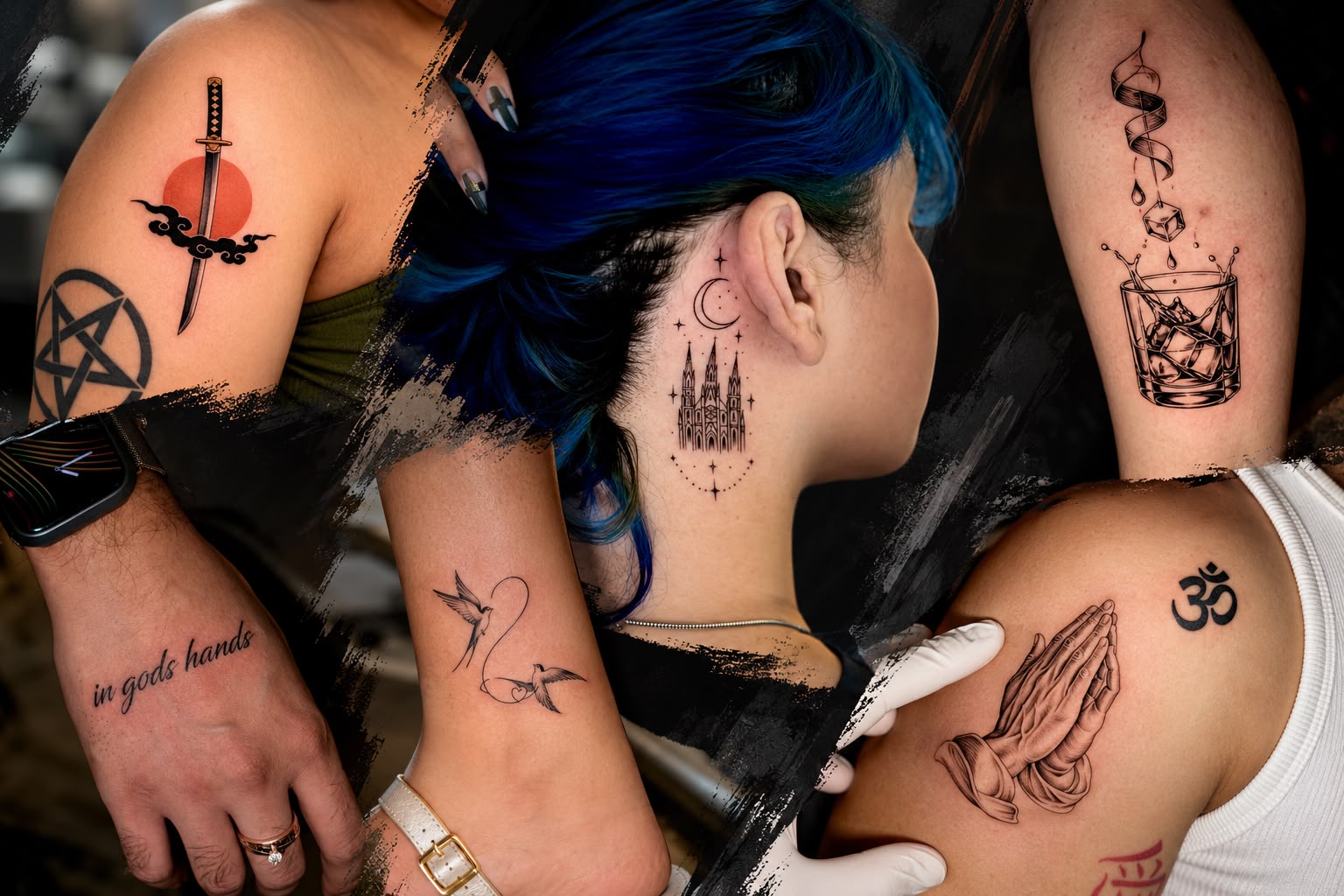
Thinking about getting a tattoo but worried about the pain?
You’re definitely not alone. One of the most common questions people ask before getting tattooed is, “How much is it actually going to hurt?”
The honest answer is that tattoo pain depends on several things, including the placement, your personal pain tolerance, the size and style of the tattoo, and how long the session lasts.
Some areas feel like a mild scratching sensation, while others can feel considerably more intense. Knowing what to expect can make your tattoo experience much more comfortable.
Tattoo Pain Chart: From Low to High
Here’s a general idea of how different body parts compare:
- Low pain: Outer upper arm, shoulder, thigh, calf
- Moderate pain: Forearm, bicep, upper back, chest
- Higher pain: Ribs, elbow, knee, inner arm
- Very high pain: Spine, collarbone, ankle, foot, hands, sternum
Keep in mind that this is only a general guide. Everyone experiences tattoo pain differently.
What Makes Some Tattoo Placements More Painful?
There’s a simple reason why certain areas hurt more.
Tattoo needles work by repeatedly penetrating the skin, and areas with less fat, more bone, thinner skin, or a higher concentration of nerve endings can feel more sensitive.
For example, tattooing directly over a bony area can create a sharper sensation because there is less tissue between the needle and the underlying bone.
On the other hand, areas with more muscle and cushioning can feel easier for many people.
1. Outer Upper Arm, Low Pain
The outer upper arm is one of the most beginner-friendly tattoo placements.
There’s usually a decent amount of muscle and tissue in this area, which can make the tattooing process feel more manageable.
Pain level: ★★☆☆☆
It’s a popular choice for first tattoos because you can usually sit comfortably during the session, and the area gives artists plenty of space to work.
Good for: First tattoos, medium designs, lettering, portraits and larger pieces.
2. Shoulder, Low to Moderate Pain
The shoulder is another relatively comfortable area for most people.
The rounded shape also gives tattoo artists a great canvas for different designs. However, the closer the tattoo gets to the collarbone or shoulder blade, the more sensitive it may become.
Pain level: ★★☆☆☆
If you’re nervous about your first tattoo, starting on the outer shoulder can be a good option.
3. Forearm, Low to Moderate Pain
Forearm tattoos are extremely popular, and for good reason.
The area generally has a reasonable amount of muscle and tissue, making it easier for many people to handle. The outer forearm is usually more comfortable than the inner forearm.
Pain level: ★★☆☆☆ to ★★★☆☆
The inner forearm can feel more sensitive because the skin is softer and there are more nerve endings.
Tip: If you want your first tattoo somewhere relatively manageable, the outer forearm is worth considering.
4. Thigh, Low to Moderate Pain
The outer thigh is often considered one of the easier tattoo placements.
There is plenty of muscle and tissue, and the area provides a large canvas for detailed designs.
Pain level: ★★☆☆☆
This makes the thigh a popular choice for larger tattoos, especially when the design requires a longer session.
The inner thigh, however, can be considerably more sensitive.
5. Calf, Moderate Pain
The calf sits somewhere in the middle of the tattoo pain scale.
The outer calf can be relatively comfortable, although you may notice more sensitivity as the tattoo gets closer to the shin or ankle.
Pain level: ★★★☆☆
For larger calf tattoos, the length of the session can sometimes become more important than the actual pain level.
6. Upper Back, Moderate Pain
The upper back generally has a good amount of muscle and tissue, making it a fairly manageable tattoo location.
Pain level: ★★★☆☆
However, areas closer to the spine or shoulder blades can feel more intense because of the underlying bone.
The upper back is also an excellent location for larger tattoos because artists have plenty of space to work with.
7. Ribs, High Pain
Rib tattoos have a reputation for being painful, and there’s a reason for that.
The ribs have relatively thin skin and less cushioning around the bones. You may also feel the vibration of the tattoo machine against the rib cage.
Pain level: ★★★★☆
Another factor is the movement of your body while breathing. Staying relaxed and breathing normally can help make the experience easier.
Tip: Avoid going into a rib tattoo session tired, dehydrated, or on an empty stomach.
8. Elbow and Knee, High Pain
Tattoos around the elbow and knee can be challenging because these areas have less cushioning and lots of movement.
Pain level: ★★★★☆
The skin around the elbow and knee can also be difficult to tattoo evenly because of the shape and texture of the area.
If you’re planning a tattoo here, choosing an experienced tattoo artist is especially important.
9. Hands, Feet and Ankles, High Pain
Hands, feet and ankles can be surprisingly sensitive.
These areas have thinner skin, many nerve endings and less cushioning in certain spots.
Pain level: ★★★★☆ to ★★★★★
There’s another thing to consider: tattoos on hands and feet can experience more friction and exposure than tattoos on areas covered by clothing.
That can affect healing and the long-term appearance of the tattoo.
10. Sternum and Spine, Very High Pain
The sternum and spine are among the more sensitive tattoo placements.
There isn’t much cushioning over these bony areas, so the sensation can be sharper and more intense.
Pain level: ★★★★★
Large designs in these areas can also mean longer sessions, which can make the overall experience feel more demanding.
That doesn’t mean you should avoid these placements. It simply means you should be prepared and choose an artist who is experienced with detailed work in sensitive areas.
What Does Tattoo Pain Actually Feel Like?
Tattoo pain isn’t always the same throughout a session.
Many people describe it as a combination of:
- Repeated scratching
- A burning or stinging sensation
- Vibration from the tattoo machine
- Sharp sensitivity around bony areas
- Tenderness after the session
The sensation can also change as the session gets longer. Your skin may become more sensitive after being worked on for several hours.
How Can You Make a Tattoo Session More Comfortable?
You can’t completely remove tattoo pain, but you can make the experience easier.
Get enough sleep
A well-rested body can handle a tattoo session better than when you’re exhausted.
Eat before your appointment
Have a proper meal before your session. Avoid getting tattooed while extremely hungry.
Stay hydrated
Drink enough water before and during the day of your appointment.
Avoid alcohol
Alcohol can affect your body in ways that may make the tattooing process and healing more difficult.
Choose the right artist
An experienced tattoo artist can make a huge difference. Good technique, proper equipment and a comfortable studio environment can make the entire experience easier.
Communicate with your artist
If the pain becomes difficult to handle, tell your artist. Taking a short break is completely normal.
Does Bigger Tattoo Mean More Pain?
Not necessarily.
A large tattoo may involve a longer session, which can lead to more overall discomfort. However, a small tattoo placed directly over a sensitive area can sometimes hurt more than a large tattoo on a comfortable part of the body.
The placement, tattoo style, session length and your personal pain tolerance all play a role.
Final Thoughts
Tattoo pain is part of the experience, but it shouldn’t be the thing that stops you from getting a design you genuinely love.
Some areas will be easier, while others will definitely test your patience. The good news is that the actual experience is usually manageable when you prepare properly and work with an experienced tattoo artist.
If you’re unsure about the right placement, talk to your tattoo artist before the session. They can help you choose a location that works well for your design, lifestyle and comfort level.
After all, a great tattoo is not just about the design, it’s also about having a safe, comfortable and memorable experience.
Leave a Reply